
We co-designed the Victorian Youth Strategy Forum, a youth-led event at Parliament House delivered in partnership with the Office for Youth.
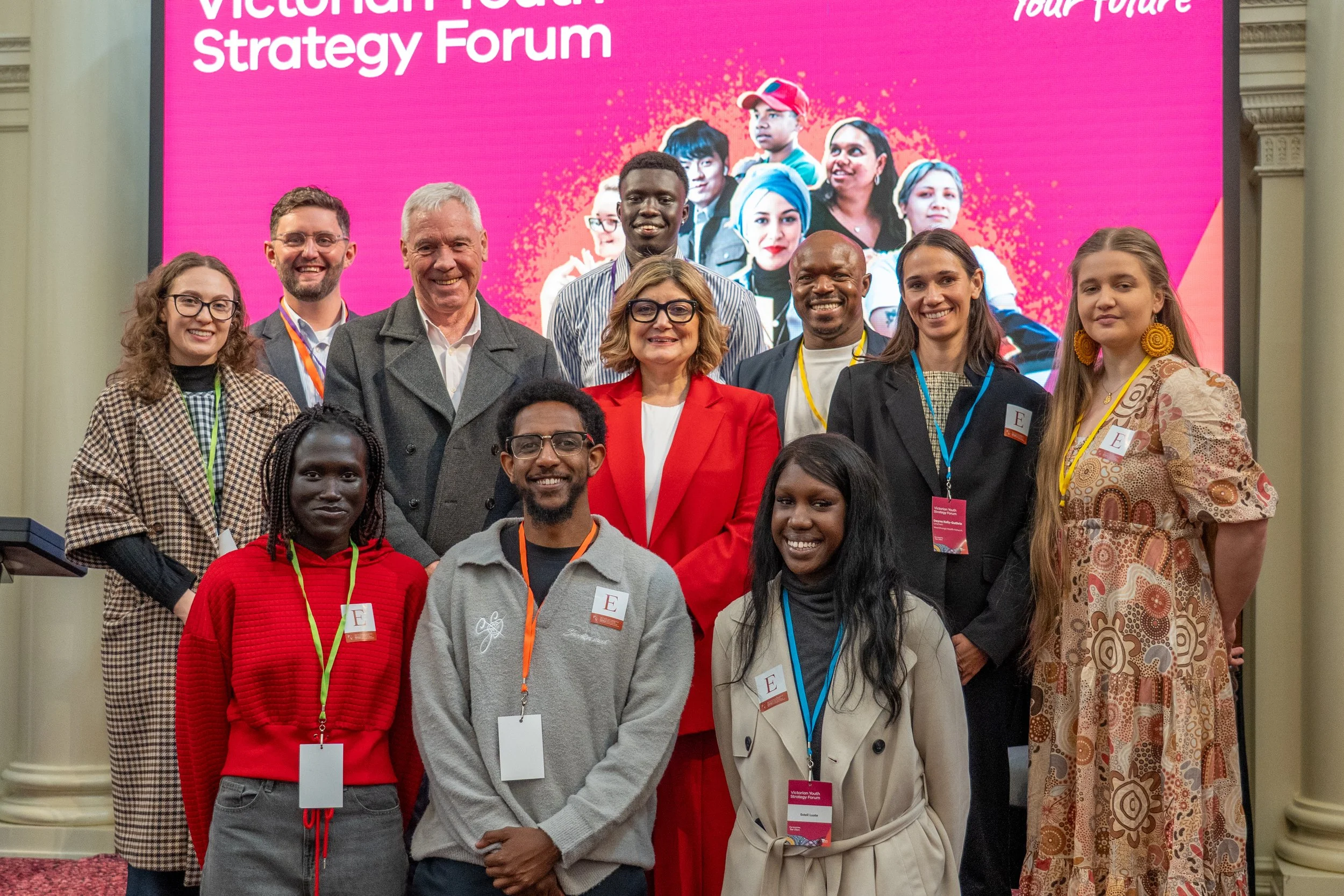
Attendees of the Victorian Youth Strategy Forum with Minister for Youth, Hon. Natalie Suleyman
The Victorian Youth Strategy Forum was a co-designed, youth-led event delivered in partnership with the Office for Youth as the strategy reached its midpoint. YLab collaborated with members of the Victorian Youth Congress (VYC) to design activities, roles, and facilitation structures that created a genuinely two-way dialogue between young people and the sector. The Forum brought together over 150 participants — including youth workers, government representatives and young people — to reconnect with the intent of the Youth Strategy, reflect on what has changed since 2022, and shape priorities for the next two years.
The Challenge
After the initial launch of the Victorian Youth Strategy, there was a strong desire to maintain the momentum, creativity and agency young people brought to the process. As the Strategy reached its midpoint, the Office for Youth needed a way to:
Share clear updates on progress to date
Understand how young people’s needs and priorities have shifted since 2022
Create a space for honest, future-focused dialogue
Ensure youth voices weren’t an “add-on”, but led facilitation, conversation and direction-setting
The challenge was to design a Forum that was energetic, inclusive and youth-led — while navigating a symbolic and formal setting (Parliament House) that posed sensory, cultural and power-dynamic barriers to participation.
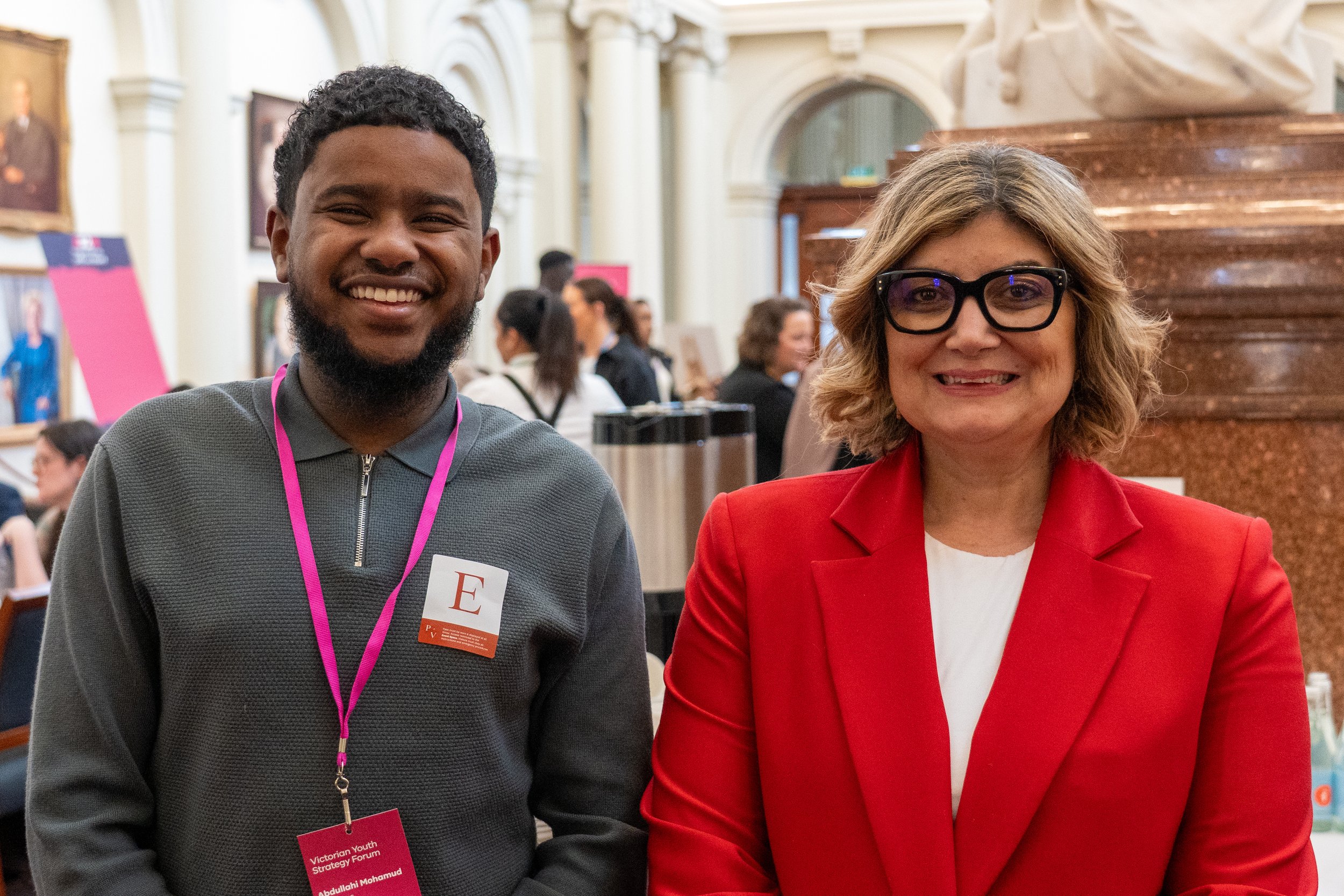
Forum attendee and Minister for Youth, Hon. Natalie Suleyman
What we did
Working alongside the Victorian Youth Congress, we used a youth-centred co-design approach to develop the Forum’s agenda, roles, activities and facilitation style. This included:
Youth-Led Facilitation & Visible Leadership
We created MC, facilitation and hosting roles for VYC members, ensuring young people set the tone of the day and modelled the level of openness and authenticity expected in the room. Survey results later showed this visibility was one of the most powerful elements for both young and non-young participants.
Co-Designed Interactive Activities
To encourage candid dialogue, we designed a suite of engaging, tactile activities including:
Living Exhibition Narrative Boards – where young people captured real-time insights, challenges and aspirations
Aspiration Wall & Hope Notes – creative, low-barrier ways for participants to express priorities
Small-group breakout conversations – allowing young people to facilitate discussions and draw out diverse lived experience
Future Visioning Sessions – exploring what should be prioritised in the Youth Strategy over the next two years
These activities were intentionally built to centre youth voices and move beyond passive consultation.
Embedding Youth Ownership Across the Day
Young people were involved not only in facilitation, but in shaping the structure, tone, and guiding questions. The Forum was designed to feel like “young people’s event inside Parliament House”, ensuring that ownership was visible, felt, and recognised.
Real-Time Insight Gathering
All activities were designed to generate insight into four core areas:
Achievements that have mattered most
Emerging challenges since 2022
What needs to shift for the next phase of the Strategy
How to strengthen youth–government relationships
These insights were captured live by youth facilitators and later synthesised into a comprehensive recommendations report.
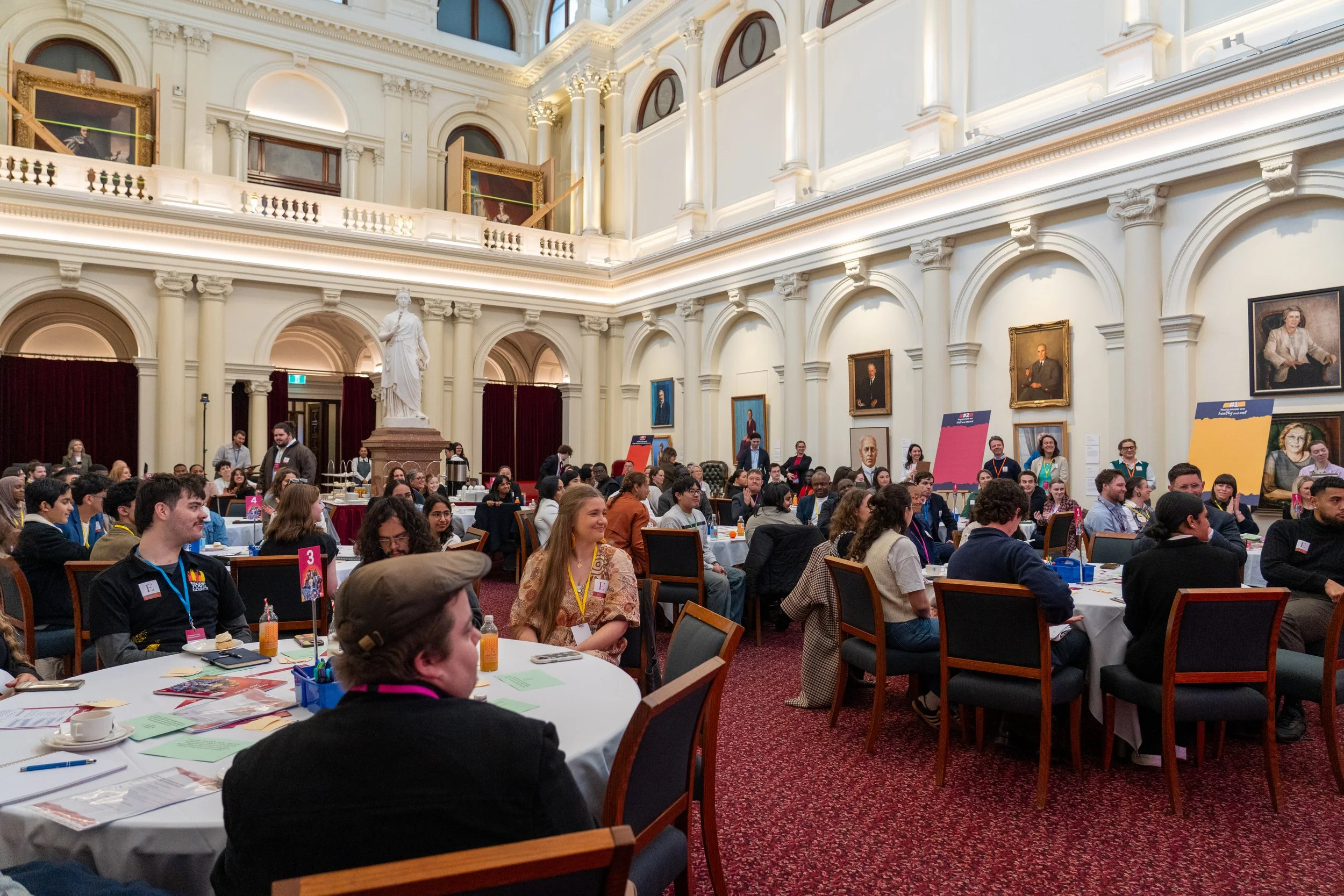
The Forum in session at Parliament House.
The Impact
Survey responses show that the Forum successfully deepened understanding, strengthened youth voice, and generated clear priorities for the future of the Youth Strategy.
1. Increased Understanding of the Youth Strategy
Young people reported leaving the Forum with a stronger grasp of what the Strategy aims to achieve and how their voices feed into it.
2. Youth Leadership Strengthened Trust and Engagement
Both young people and sector representatives highlighted that youth facilitation made discussions feel more authentic, safer and more open. One participant noted:
“It felt so important to be celebrated in a space that seems out of reach… it felt like we were having a respectful, informed chat.”
3. Rich, Meaningful Dialogue
Over 80% of respondents said the activities helped them engage in “rich discussion”. Young people especially valued the small group activities, the Living Exhibition boards, and the Aspiration Wall.
4. Clear Priorities for the Next Two Years
The Forum produced actionable themes around:
Increasing support for rural and regional young people
Strengthening early intervention and preventative programs
Prioritising safety, wellbeing, and inclusivity
More employment, leadership, and capacity-building opportunities for young people
Clearer transparency about progress and achievements
5. System-level Reflections for Government
Participants voiced consistent needs for:
Better cross-government coordination
Tangible examples of progress and impact
Clearer accountability and follow-through
More space for honest critique
6. A Strong Foundation for Future Forums
The Forum generated a set of actionable recommendations, ranging from improved accessibility and spatial design to enhanced co-design, facilitation training, travel support for regional young people, and clearer communication materials. These insights now guide planning for the next Youth Strategy Forum.
Watch Project Manager, Maddy, and Forum attendee, Darcy, in conversation about the project: