
We partnered with Gippsland Region Public Health Unit (GRPHU) and a coalition of Councils (Bass Coast Shire Council, Baw Baw Shire Council, East Gippsland Shire Council, Latrobe City Council, South Gippsland Shire Council, Wellington Shire Council) to co-design No Filter: Real Stories Gippsland, a youth-led vaping prevention campaign responding to rising vaping rates among young people across the region.
This initiative was made possible through VicHealth’s Vaping Prevention Grant, supporting community-led and informed initiatives for reducing and preventing vaping harm among young people.
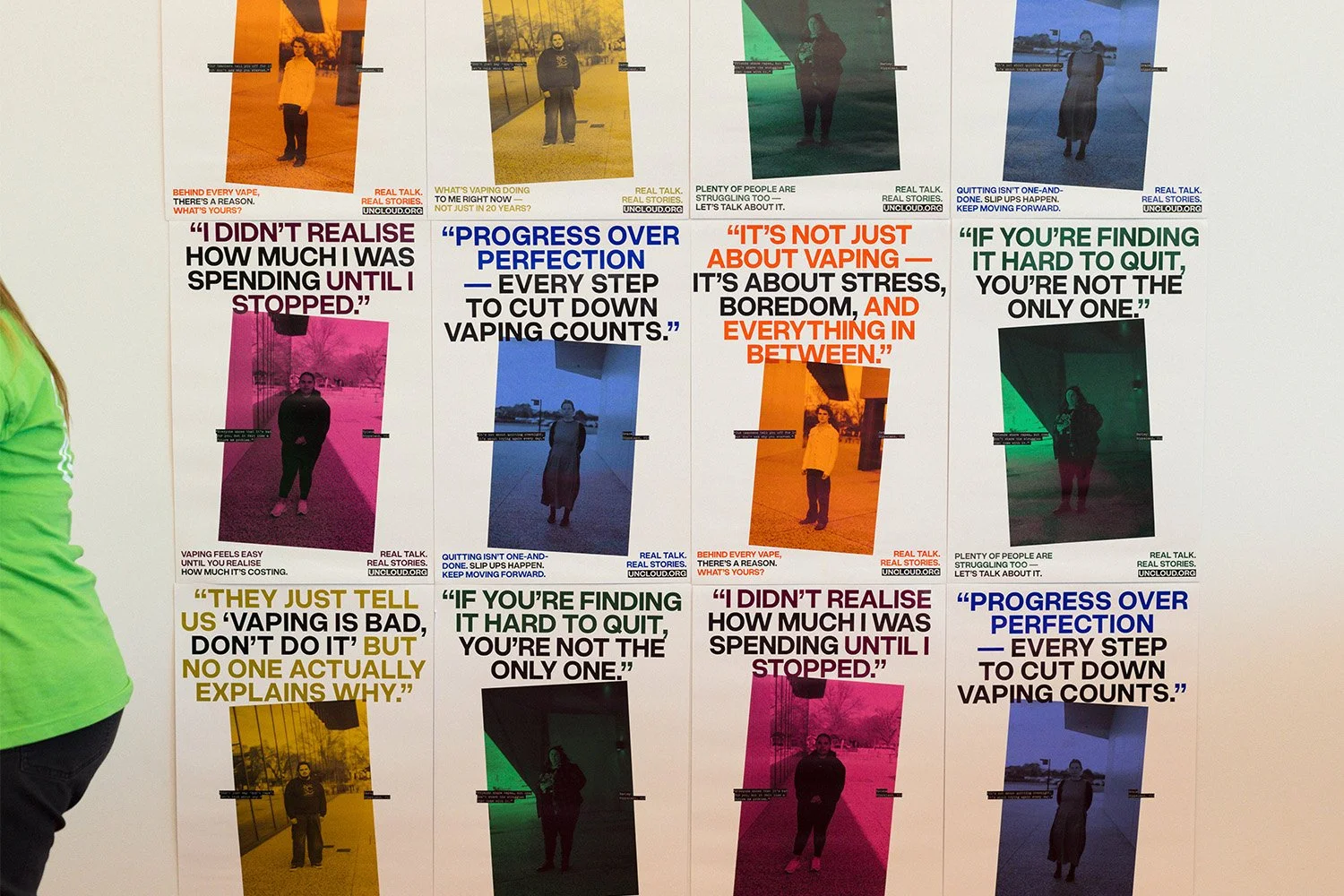
Printed posters from the No Filter: Real Stories Gippsland vaping-prevention campaign
The Opportunity
With the highest smoking rates in Victoria at 19.3% of adults and pregnancy smoking rates more than double the state average, Gippsland faces a significant and growing challenge when it comes to young people and vaping. Being a relatively new phenomenon, the long-term health impacts of vaping are still not fully understood, making prevention all the more urgent. What was already known, however, was cause for concern: young people who vaped were three times more likely to take up tobacco smoking, and recent data showed smoking rates among under-25s were climbing again for the first time in decades. These trends sat alongside already high rates of lung cancer, cardiovascular disease and chronic obstructive pulmonary disease across the region, making the stakes for young people's long-term health especially high.
Understanding this challenge meant understanding Gippsland itself. The region is home to around 300,000 people spread across 40,000 km², with a population that experiences higher rates of disadvantage than the Victorian average — including lower incomes, lower educational attainment, higher youth unemployment and greater psychological distress. These layers of complexity meant that a one-size-fits-all approach to vaping prevention wouldn't work here. What was needed was a campaign genuinely grounded in the local context and co-designed with the young people it aimed to reach.
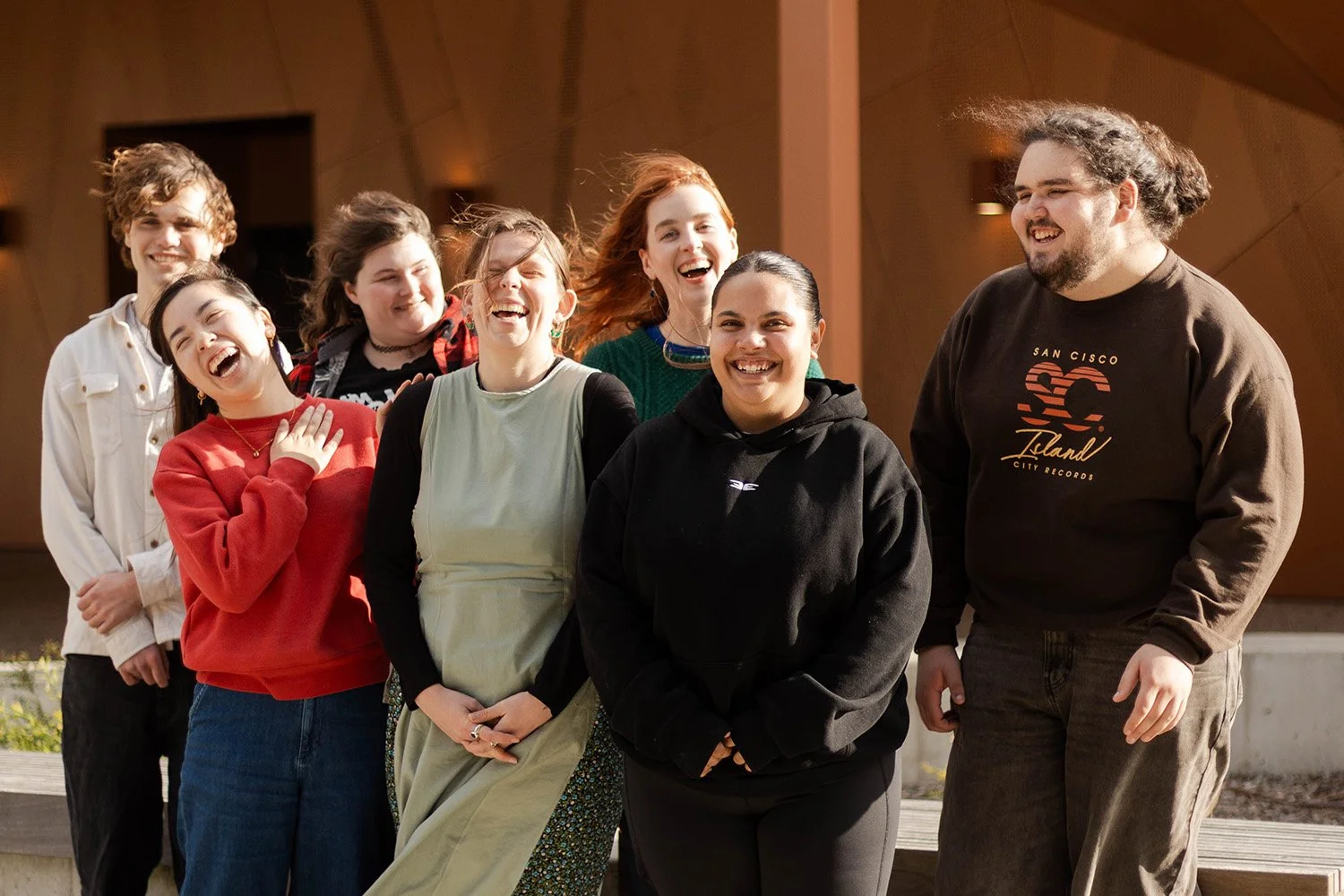
YLab project team and young people from Gippsland at our storytelling workshop in Traralgon.
Our Solution
Over the course of a year, we engaged young people across Gippsland with lived experience of vaping — or who were concerned about it — through a co-design process spanning workshops, content development and creative mentorship. Interest in the project far exceeded expectations, with 97 young people nominating themselves for the co-design committee and 51 for the content creation group, reflecting a genuine hunger for local initiatives where young people's voices count.
YLab supported participants to develop, film and edit short videos sharing their experiences and perspectives on vaping, with each young person retaining full agency over how their story was told and whether it was shared. This process resulted in a multifaceted print and digital campaign — posters, video content, written interviews and illustrated sticker sheets — developed by young people and distributed by council partners across the region.
The No Filter: Real Stories campaign deliberately moved away from fear-based or lecture-style messaging, an approach directly shaped by what young people told us: that scare tactics don't work and that they'd rather hear honest stories from peers than be talked at by adults. Instead, the campaign took a harm-reduction approach that acknowledged the real social pressures, stressors and curiosity that shape young people's relationships with vaping and trusted young people to engage with that honestly.
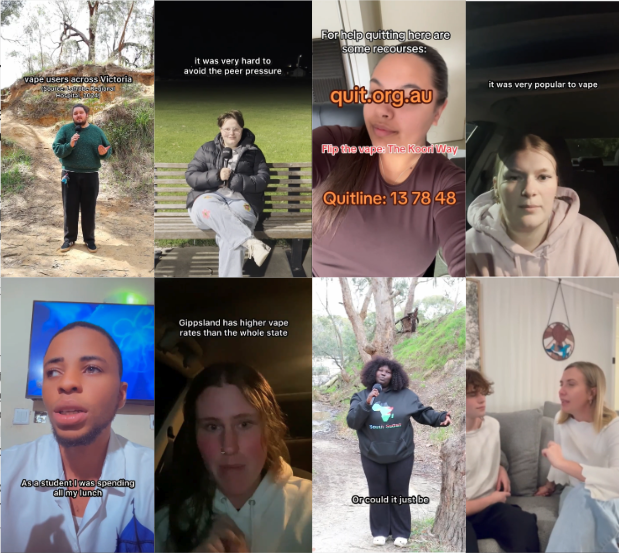
Stills from the campaign videos created by Gippsland young people.
The Insights
1. Vaping feels normal but it isn’t universal
Vaping is deeply normalised in Gippsland's social circles, yet not every young person vapes. Those who don’t are often invisible in the conversation, drowned out by the perception that ‘everyone does it’. This silence meant concerns went unspoken and misinformation went unchallenged, making honest peer-led conversation a critical gap to fill.
2. Lectures switch young people off
Generic warnings and adult-made campaigns weren't landing. Young people wanted open conversations and spaces where they could ask questions and hear real perspectives rather than being told what to do. Long-term health risks felt abstract and easy to dismiss, but short-term impacts like trouble breathing, changes to skin and the financial cost of the habit were far more likely to cut through.
3. Real stories from real people hit differently
What young people said they would actually respond to were unfiltered, personal accounts from peers — stories about struggling to quit, regretting starting or experiencing health impacts firsthand. Authenticity and relatability mattered far more than polished production or authority-figure messaging.
4. Young people vape to cope and quitting feels impossible alone
Stress, anxiety and boredom are key drivers of vaping, particularly in smaller towns with limited activities and services. Vapes are also easy enough to access through social networks, making cutting back harder even when young people want to. Those who did want to quit felt unsupported: adults either ignored the issue or responded with punishment rather than practical help. Without healthier alternatives, real coping tools or judgement-free support, quitting feels out of reach.
5. Young people wanted to be part of the solution
Campaigns designed without their input felt irrelevant and easy to ignore. Involving young people in shaping the message wasn't just a nice-to-have; it was the difference between a campaign that connected and one that didn't.
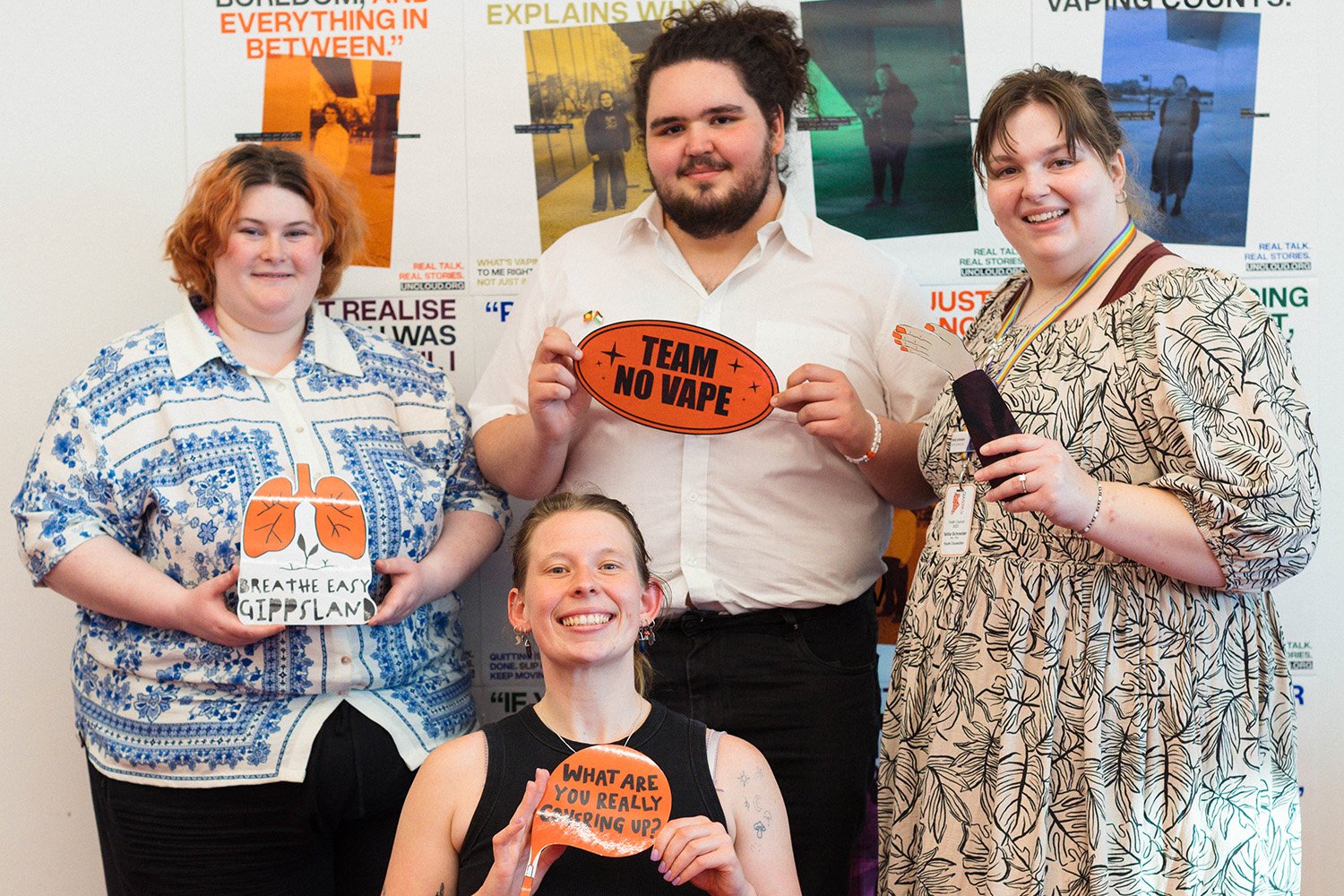
Gippsland young people at the No Filter: Real Stories Gippsland launch event.
Our Impact
The resulting campaign amplified authentic local voices and positioned young people as creators rather than passive audiences. This approach strengthened youth health promotion practice across Gippsland by embedding co-design, creative storytelling and meaningful youth participation.
Designed with young people, not for them
The insights gathered through co-design directly shaped what the campaign became. Young people didn't just inform the messaging, they made decisions about it, tested it against their own experiences and pushed back when something didn't ring true. Because the campaign was built by young people in Gippsland for young people in Gippsland, it had a credibility that no externally produced ad campaign could replicate.
“I’ve never been involved in a process like this before. It feels very exciting to be working on something for my community.”
Centreing young people through place-based co-design
With local council representatives actively present and listening in workshops, participants experienced firsthand what it felt like to have decision-makers genuinely engaged with their perspectives. In a region as geographically vast and community-diverse as Gippsland, a place-based approach also meant the campaign didn't flatten those differences — it held them, ensuring young people from different towns could see their own experiences reflected in the final work.
Growing local creative talent
Beyond the campaign itself, the project created real and lasting creative opportunities for the young people involved. Participants received mentorship, storytelling training and dedicated support to develop content in formats that felt right for them. One young person worked alongside a graphic designer to transform their hand-drawn concepts into a sticker sheet. Another used the project as a chance to develop their animation skills, channelling their own experience of trying to quit vaping into a short-form animated piece. Another participant wasn't comfortable filming in public and worked with the team to find a setting that felt safe and authentic — their car — which ended up resonating with many Gippsland young people who spend significant time commuting between towns. These weren't workarounds, it was the co-design approach in action.
“Something that really stood out to me from the training was the reminder that I don’t need to be a professional editor or have high-end gear to tell powerful stories… I loved the idea that even with just a phone, I can start experimenting, creating impact, and telling stories that matter, especially by using B-roll, narration, and subtle editing techniques. That really empowered me to stop overthinking and just start.”
Stronger together: a regional collective effort
The partnership between YLab, VicHealth and Gippsland councils created the conditions for something more responsive and more embedded than a top-down health initiative. The coalition of Gippsland councils’ willingness to iterate kept the project close to what young people actually needed, while collaboration with existing efforts like VicHealth’s UNCLOUD campaign meant the team built on what was already working rather than starting from scratch. As the campaign moves into council-led rollout, with each council selecting assets they know will resonate locally, the model of shared ownership that made this project possible is already shaping what comes next.
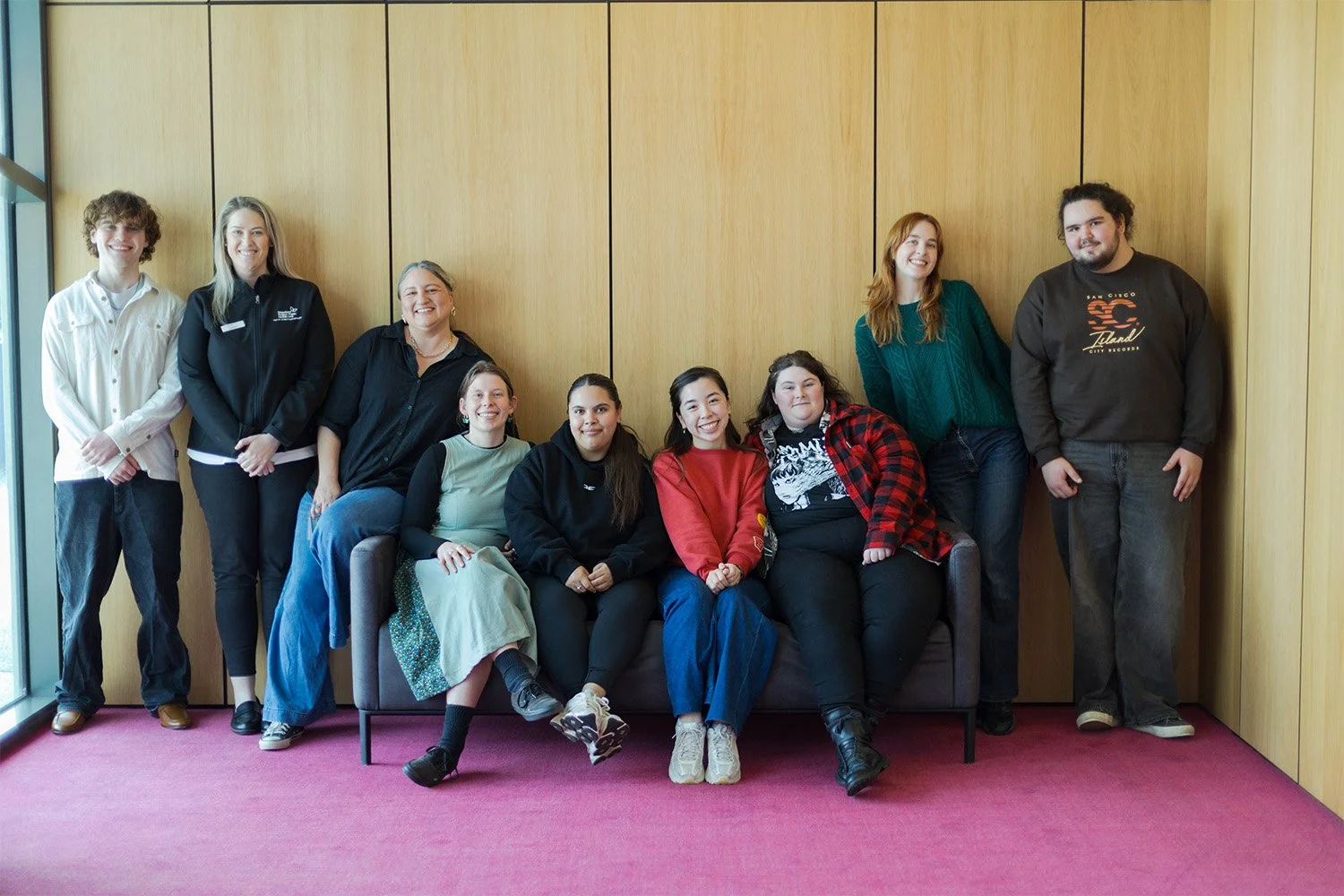
Council and GRPHU partners, YLab project team and young people from Gippsland at our storytelling workshop in Traralgon.
The Future
This campaign was always intended as a beginning, not a conclusion. The co-design model developed through this project — one that genuinely shifted power to young people and produced content grounded in lived experience — has demonstrated something worth repeating.
In the near term, the priority is sustaining what's been set in motion. Council partners are already selecting and distributing assets from the campaign, and the place-based approach means that work will continue to feel local and relevant long after the project has officially wrapped.
Looking further ahead, the conditions that made this project necessary haven't changed. Vaping remains widespread, its long-term health impacts are still emerging and young people in Gippsland continue to navigate those pressures. The work of building community capability to respond — in schools, in councils, in local services — is ongoing.
What this project proved is that young people can lead the design of health promotion campaigns that target them. That insight is perhaps the most transferable thing to come out of this work, and it will continue to shape how we approach co-design and youth participation throughout our work at YLab.